


THE HIGH SCHOOL
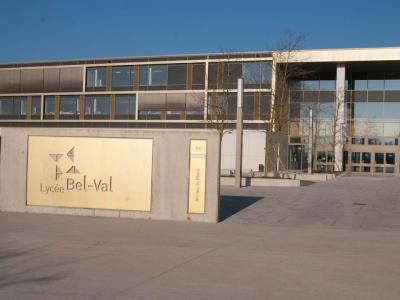
Bel-Val High School is a public high school that offers both secondary education and technical secondary education at the lower level, as well as a wide range of academic and extracurricular activities. The development of our future society is increasingly governed by knowledge. Education is essential for participating in society. Curiosity, a thirst for knowledge, a spirit of inquiry, and a willingness to take risks are important prerequisites for broadening one's horizons and continuously improving oneself. Our goal is to prepare students for this knowledge-based society by helping them learn to extract the essential information from the available sources and use this information in an interdisciplinary manner, thus laying the foundation for lifelong learning.
The high school will be able to take advantage of its proximity to the university to help make the Belval site a center of the knowledge society and to prepare students for its demands. Furthermore, the knowledge society needs well-founded social values. That is why we emphasize mutual respect, self-esteem and respect for others, tolerance, open-mindedness, but also reliability and responsibility. Furthermore, the sustainability of our actions is of great importance to us. To prepare our students for their future lives, we want to teach them that rights and responsibilities go hand in hand. In this way, we aim to help them become independent citizens.
Technical requirements
Admission requirements: 5G pass with advanced overall level
Engineering section GIG
Admission requirements
5G - with an advanced course in mathematics and a sufficient level in computer science.
Sections - Engineering
This section prepares students for mid-level careers in industrial
technical-commercial companies, among others. It also prepares them for higher education in engineering and other
professions in the technical and exact sciences sector.
“Computer Science” section:
This section prepares students for professional life and higher education
in computer science
Social Sciences Section GSO
Grades 8 to 11
As part of the technical division of technical secondary education, the Social Sciences section,
like the IG and CM sections in particular, aims to prepare
students for professional life and higher education in the humanities
and social sciences.
With this in mind, the SO section covers a wide range of subjects
(such as history/geography, philosophy, political economy, languages, psychology, etc.) in order to provide a solid basic education and general knowledge essential for professional and academic practice in this field. At the end of the 11th grade SO class, the technical secondary school diploma allows students to pursue higher education and
university studies. Due to its status, the SO section (like all sections of the technical division) is therefore equivalent to a secondary school diploma.
Given the specific nature of the section, it is possible for students to continue their studies in the subject covered, or even in the humanities (history, geography, philosophy, sociology (...), political and economic sciences, social and/or educational sciences, etc.
Health and social professions section GPS
Description
Admission requirements
5G - with a strong level in natural sciences and a sufficient level in social sciences
Fields of activity
The 4th and 3rd PS classes include general education, as well as theoretical and practical pre-training for health and social professions.
Nursing training consists of two years of technical secondary education (2nd
and 1st) and two years of BTS . Students who successfully complete the 13th grade are awarded a
technical baccalaureate diploma giving access to either the BTS in nursing or higher education.
Classical secondary education:
Section P:
This section focuses on human beings, their development, and their behavior. In order to best prepare students for further studies at university, data analysis and biology skills are integrated into the section. This interdisciplinary approach is reinforced by a personal research project in which students will integrate the skills acquired in the various specialization disciplines.
The disciplines in the “specialization” component are:
– “Human and Social Sciences”: students will explore various disciplines in the humanities and social sciences through a multidisciplinary approach, with the aim of giving them a comprehensive overview of the many facets of these fields so that they can choose university studies that match their interests and skills;
– “Data Science and Communication”: students will develop their skills in data analysis (collection, processing, interpretation) and communication (presentations and reports on the results of their analyses) necessary for further studies in the humanities, social sciences, and cognitive sciences;
– “Life and Earth Sciences”: students will acquire certain skills in the field of human biology closely related to human development and behavior;
– “Personal research project”: a large-scale project in which students will pool the skills and knowledge acquired in the various specialization disciplines and thus have the opportunity to learn the scientific methods necessary to carry out research work with a view to continuing their university studies.
Mathematics is taught at the same level as in the CD section “Economics and Mathematics.”
Vocational training:
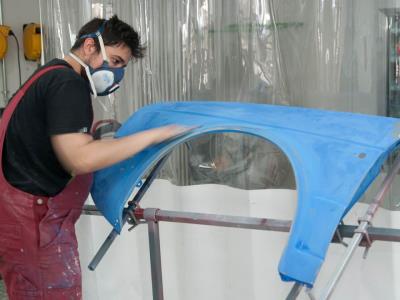
Electromobility technician
Are you interested in new, future-oriented propulsion technologies in motor vehicles?
Have you always wanted to know how an electric car can accelerate so powerfully and quietly?
Would you like to be able to work on modern high-voltage systems in hybrid and electric cars?
Would you like to gain practical experience in a company in addition to your school education?
Then the training program to become a mechatronics technician for hybrid and electric vehicles is right for you.
The dual training program lasts two years. The requirements for admission to this program are:
- a 9th grade diploma in automotive mechatronics (3TPMA) or
- a DAP diploma in automotive and motorcycle mechatronics (MA).